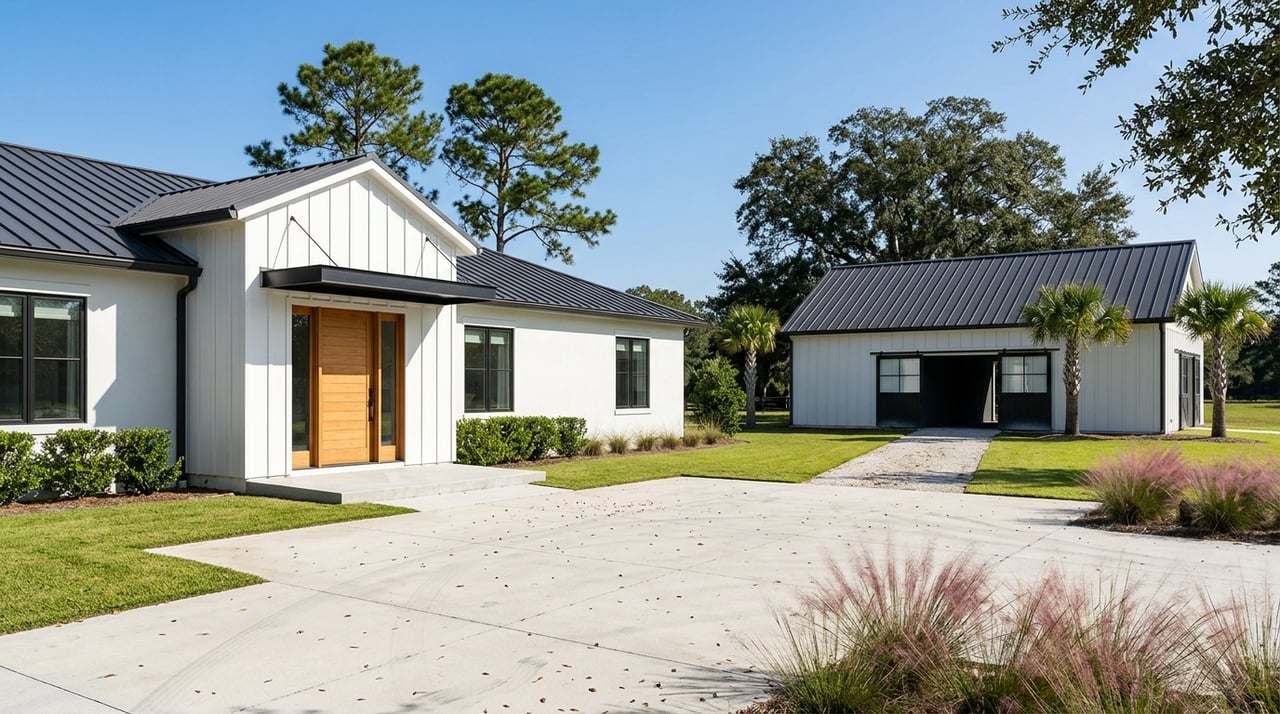
Dreaming about room for horses, a barn, and open land in Odessa? The opportunity is real, but acreage shopping here is not as simple as counting fenced acres or admiring a pretty gate. If you want a property that truly fits your lifestyle, you need to understand zoning, access, utilities, and how much of the land is actually usable. This guide will help you ask the right questions and buy with more clarity and confidence. Let’s dive in.
Why Odessa acreage needs careful review
Odessa’s rural lifestyle appeal comes with a different set of buying rules than a typical suburban home search. In parts of the area, Hillsborough County’s Keystone-Odessa Rural Development Standards shape how land can be laid out and used, especially outside the Urban Service Area within the Keystone-Odessa Community Plan.
That matters because the buying conversation is often about more than the house itself. Parcel access, lot layout, buffering, and environmental constraints can all affect how well a property supports your plans for horses, storage, or future improvements.
Gross acreage vs usable acreage
One of the biggest mistakes buyers make is assuming all acreage is equally functional. A five-acre parcel may sound ideal on paper, but wetlands and other environmentally sensitive areas can reduce where you can place structures, add fill, or create pasture-ready space.
In Hillsborough County, limits on fill, permanent structures, and impervious surfaces in these areas can make the practical footprint much smaller than the total acreage shown on a plat. If you are buying for equestrian use, this distinction is especially important.
What usable acreage means for you
Usable acreage is the part of the property that can realistically support your daily needs. That may include:
- A house footprint
- Barn or agricultural structures
- Driveways and parking areas
- Turnout or pasture space
- Storage areas for equipment or supplies
If a parcel has notable wetlands, setbacks, or preservation constraints, your layout options may narrow quickly. This is why acreage buyers should evaluate the land with the intended use in mind, not just the total number of acres.
Check zoning before you fall in love
If you already know how you want to use the property, zoning should be one of your first checkpoints. Hillsborough County offers a zoning verification process that can confirm the current zoning and whether a specific land use is permitted on a parcel.
This step can save you time and stress. If your goal is to add a barn, keep agricultural equipment, or support a bona fide agricultural use, you want to confirm those details early rather than make assumptions based on neighboring properties.
Questions to ask about zoning
Before moving forward, consider asking:
- Can this parcel legally support the barn or accessory structures you want?
- Is agricultural equipment storage allowed here?
- Does the intended use fit the current zoning designation?
- Are there setback or placement rules that affect the layout?
For buyers with a very specific vision, these questions can be just as important as price or square footage.
Understand barns, sheds, and accessory structures
On acreage properties, outbuildings often play a major role in how the property functions. In Hillsborough County, accessory structures generally cannot be used for living or sleeping and are generally limited to 15 feet in height, although agricultural accessory structures such as barns are treated separately under county code.
That distinction matters if you are picturing a tack room, storage shed, workshop, or barn as part of your purchase. You will want to understand which improvements are considered standard accessory structures and which fall under agricultural treatment.
Storage and equipment rules matter too
Agricultural equipment storage is allowed in A and AM districts as an accessory use when the parcel has a permitted principal use. It must be set back 200 feet from zoning lot boundaries.
Open storage is also allowed as an accessory use in agricultural districts when it serves a bona fide agricultural operation on the parcel. If your daily routine will involve trailers, tractors, feed delivery, or equipment storage, these rules deserve a close look.
Lot coverage can affect your layout
Not every acreage property gives you unlimited freedom to build and pave. In subdivisions of 20 acres or more in certain zoning districts, Hillsborough County requires a mix of access types such as frontage, easements, and private driveway extensions. At least 30 percent of the lots served by internal project roadways must not front a roadway.
Lot coverage can also become a real design constraint. Lots under two acres are capped at 30% lot coverage regardless of zoning, which can limit how much space you have for the house, barn, drive aisles, parking, and other hardscape.
Why this matters for horse properties
Equestrian use often needs more than just a home and a patch of grass. You may need room for:
- A safe driveway approach for trailers
- Turning space and parking
- Barn placement with proper setbacks
- Storage areas
- Separation between living areas and work areas
A property can look roomy at first glance but still feel tight once you start mapping out real-world use.
Confirm water, sewer, well, and septic
Utility assumptions can create expensive surprises on rural property. In Hillsborough County, public water and wastewater availability should be confirmed parcel by parcel using the county’s service-area mapping rather than assumed from the road, neighborhood name, or nearby homes.
Some Odessa acreage properties may rely on private systems instead. The Florida Department of Health in Hillsborough County handles septic system permitting and inspection and also regulates drinking water and private residential well systems in the county.
Utility questions to ask early
Make sure you understand:
- Whether the parcel is on public water
- Whether the parcel is on public sewer
- Whether a private well serves the home or land
- Whether a septic system is present or required
- Whether the existing setup fits your intended use
These answers can affect cost, maintenance, and future planning.
Think through pasture and daily upkeep
Buying acreage is also buying a management plan. UF/IFAS guidance emphasizes forage planning and rotational grazing for horse properties, and notes that when horse density exceeds roughly one horse per acre, pasture often functions more like exercise space than a forage source.
That means the land may not support the level of grazing you first imagined. If you plan to keep horses, it helps to view the property through the lens of day-to-day operation, not just aesthetics.
Manure planning is part of the equation
Ownership comes with practical responsibilities, and manure management is one of them. UF/IFAS notes that a 1,000-pound horse can produce about 35 to 50 pounds of manure per day.
That affects where you may need storage, how hauling or composting might work, and how the property functions over time. On smaller parcels, these logistics can become a bigger factor than many buyers expect.
Landscaping still matters
The house, entry, and frontage areas need upkeep too. UF/IFAS Florida-Friendly Landscaping guidance supports lower-input, water-wise landscape care, which can be especially useful when you are balancing the demands of a home site with the realities of acreage ownership.
Don’t assume nearby trails are equestrian
Many buyers love the idea of riding close to home, but trail access should always be verified. Hillsborough County describes the Upper Tampa Bay Trail as a pedestrian-and-bike facility, so you should not assume it includes horseback access infrastructure.
This is a good reminder that proximity does not always equal suitability. A property may feel close to outdoor recreation while still requiring a drive to reach equestrian-friendly trail systems.
Regional riding options to know
Nearby equestrian options mentioned in the research include:
- Alafia River State Park in Lithia, with about 20 miles of hiking and equestrian trails
- Brooker Creek Preserve in Pinellas County, with equestrian-only trails
- State trails such as Withlacoochee and Van Fleet, where equestrian segments parallel portions of the paved trail
If trail riding is part of your lifestyle, it helps to weigh access to these destinations along with the features of the property itself.
Ask better questions before you buy
The best acreage purchases usually come down to strong due diligence. When you know what to ask, you can better judge whether a property supports your goals now and in the future.
Here are some of the most important questions to keep in your buying process:
- Can the parcel legally support a barn, tack room, shed, or other accessory improvements?
- Do wetlands, setbacks, or preservation areas reduce the functional acreage?
- Is the site on public water and sewer, or will it rely on a private well and septic system?
- Is the nearest trail actually equestrian, or only for pedestrians and bikes?
- If the intended use is agricultural, does the property fit the county’s zoning rules and agricultural-classification framework?
How a guided search can help
Acreage and equestrian properties require a more detailed search process than many standard home purchases. You are not just evaluating finishes and floor plans. You are also looking at zoning, land constraints, utility access, and how the parcel works for your daily routine.
That is where a process-driven approach matters. With the right guidance, you can narrow your options faster, ask sharper questions, and focus on properties that fit both your lifestyle and the county framework that applies to them.
If you are exploring equestrian or acreage properties in Odessa, working with a local advisor can help you move from broad interest to a more informed shortlist. When you are ready for a tailored search and clear guidance through the details, connect with Maria Azuaje for a personalized consultation.
FAQs
What should buyers check first on an Odessa acreage property?
- Start with zoning, usable acreage, utility availability, and any wetlands or environmental constraints that could affect how the property functions.
What does usable acreage mean on an Odessa horse property?
- Usable acreage is the portion of the land that can realistically support improvements and daily use, since wetlands, setbacks, and other restrictions can reduce the practical footprint.
Can you build a barn or shed on an Odessa acreage parcel?
- It depends on the parcel’s zoning, setbacks, and county rules for accessory or agricultural structures, so zoning verification is an important early step.
Do Odessa acreage homes always have public water and sewer?
- No. Public water and wastewater availability should be confirmed parcel by parcel, and some properties may rely on private wells and septic systems.
Is the Upper Tampa Bay Trail open for horseback riding near Odessa?
- Hillsborough County describes the Upper Tampa Bay Trail as a pedestrian-and-bike facility, so buyers should not assume it provides equestrian access.
Can agricultural use affect property taxes on Odessa acreage?
- If the land is used for bona fide agricultural purposes, agricultural classification through the Hillsborough County Property Appraiser may affect taxes, and the filing deadline is March 1.