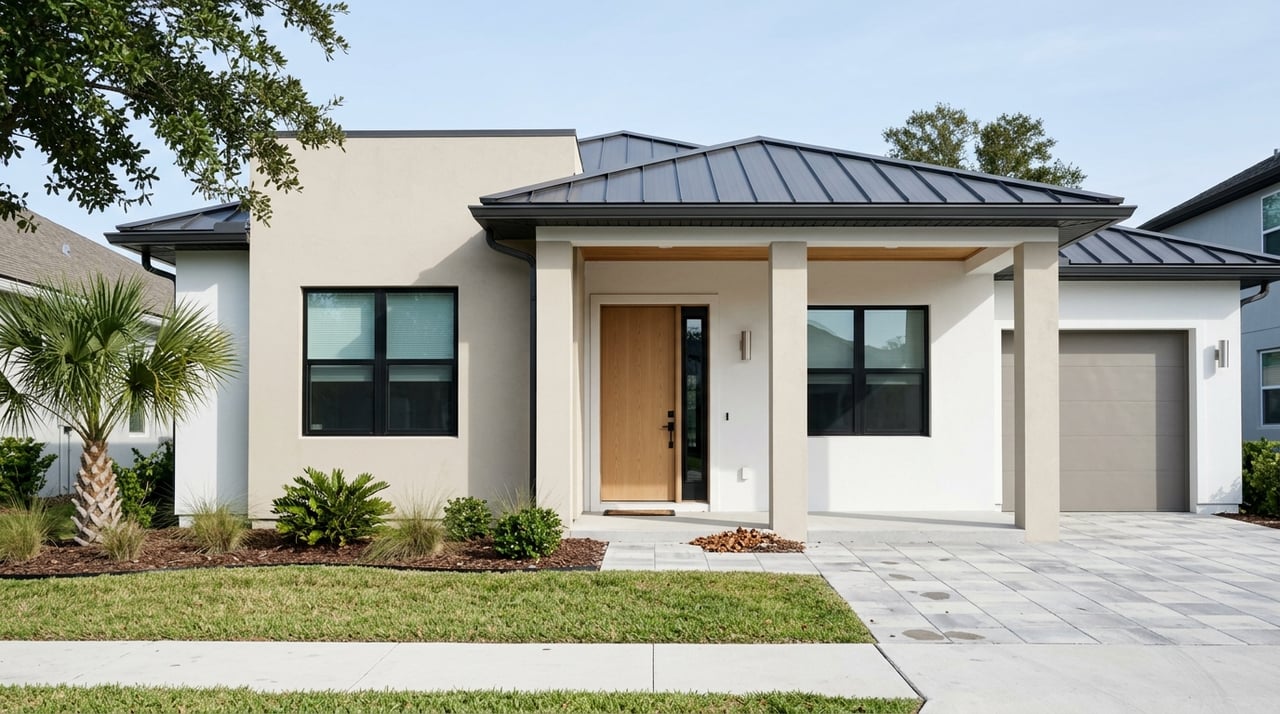
Buying new construction in Odessa can feel exciting right up until the questions start stacking up. Should you choose a builder community or buy land and build? Which upgrades are worth it? How do HOA or CDD costs affect your monthly payment? If you want a smoother decision and fewer surprises, it helps to understand how Odessa’s new-construction process works before you sign anything. Let’s dive in.
Why Odessa new construction is different
In Odessa, new construction is not just about picking a floor plan. It is often a mix of land choice, builder choice, community rules, and local approvals. That matters because your timeline and costs may be shaped by more than the home itself.
Odessa sits within unincorporated Hillsborough County, where new projects move through a broader planning and approval system. According to Plan Hillsborough’s community planning framework, the area is guided in part by the Keystone-Odessa Community Plan, and county activity reflects subdivision development such as Hiawatha Estates, Canterbury Woods, and Magnolia Farms. If a project needs rezoning, the process can include public hearings and posted notices, which can affect timing.
That means you are often planning a purchase from several angles at once. You may be comparing lots, builder options, timelines, amenity packages, and community costs, not just touring finished homes.
Know your new-construction options
One of the biggest decisions is choosing the type of new construction that fits your goals. The right path depends on how much control you want, how long you can wait, and how much flexibility you need in your budget.
Production homes
Production builders usually build within communities they control. You typically choose from a set group of floor plans, standard features, and upgrade options.
This can be a strong fit if you want a more predictable process. In many cases, the tradeoff is less flexibility on layout, lot use, and design changes.
Semi-custom homes
Semi-custom homes offer more flexibility than production homes, but they still follow a builder’s established plans and approved finish selections. You may be able to personalize more details without starting fully from scratch.
If you want some customization without taking on the full complexity of a custom build, this can be a practical middle ground. It often works well for buyers who want individuality but still value structure and guidance.
Custom homes
Custom homes give you the most control over design, land, and layout. They often start with land you already own or plan to buy, and the home is designed around your goals.
This path can take a year or more, and delays are possible. If your priority is full personalization, it may be worth the added time and coordination.
Spec homes
Spec homes are built by the builder with the intent to sell the finished home. These homes usually allow limited customization, but they can offer a faster move-in timeline.
If timing matters more than selecting every finish, a spec home may be the best fit. It can also reduce some of the decision fatigue that comes with a ground-up build.
Match the home type to your timeline
A simple rule applies in most new-construction decisions: more control usually means more time and more cost. If you want to choose land, customize design, and guide more of the process, expect a longer timeline and more moving parts.
If you want a faster path with fewer decisions, production or spec homes may be easier to manage. In Odessa, that can be especially important when county approvals, build schedules, and community development timelines all influence your closing date.
Look beyond the base price
The base price is only one piece of the budget. To understand what a new-construction home will really cost you, you need to look at upgrades, recurring fees, financing choices, and insurance.
Upgrades and options
Upgrades can make a home feel more functional and more comfortable, but they do not always increase resale value dollar-for-dollar. Homes.com notes that buyers should be careful about over-customizing if the upgrades push the home beyond what is typical for the surrounding area.
A helpful way to evaluate upgrades is to separate them into three buckets:
- Structural upgrades like room extensions or layout changes
- Functional upgrades like cabinets, storage, or better flooring in high-use areas
- Cosmetic upgrades like decorative finishes and style choices
Structural and functional items are often harder to change later. Cosmetic items may be easier to update over time, which can help you keep your initial budget in check.
HOA and CDD costs
In many Florida communities, recurring costs go beyond your mortgage payment. If the property is in a Community Development District, Florida law requires a disclosure in the initial sales contract that the district may impose taxes or assessments on the property, as outlined in the Florida Community Development District statute.
That is why you should ask early about both HOA dues and CDD obligations. These costs can significantly affect your monthly payment and your long-term affordability.
Insurance estimates
Insurance is another line item buyers should not leave until the last minute. The Consumer Financial Protection Bureau notes that insurance can be harder to find or more expensive than expected in higher-risk areas.
Before you commit, ask for an informal insurance estimate for the specific property. That extra step can help you avoid a monthly payment that feels very different from what you expected.
Think about value and resale from day one
New construction often appeals to buyers who want fewer repair issues right after closing. According to the National Association of Realtors 2024 buyer profile, 15% of buyers purchased new homes, and a leading reason was to avoid renovations and problems with plumbing or electricity.
That convenience is real, but resale still matters. The same NAR report shows neighborhood quality was the top neighborhood factor for buyers nationally, followed by convenience to friends and family.
In Odessa, that means your lot choice, community setting, and amenity structure may influence value just as much as your countertops or lighting package. A well-chosen location and practical floor plan often age better than highly personalized finishes.
Review the contract carefully
Builder contracts are not all the same. Before you sign, make sure you understand your rights, deadlines, deposits, financing terms, and inspection options.
The CFPB recommends making your offer and purchase contract contingent on financing and a satisfactory inspection. It also notes that builders may ask for an upfront deposit or earnest money, so you should ask under what conditions that money can be returned.
You should also remember that a builder may have an affiliated lender, but you are not required to use that lender. You have the right to shop around and compare loan options.
New-construction contract checklist
Before moving forward, ask these questions:
- Is the contract contingent on financing?
- Is the contract contingent on a satisfactory inspection?
- How much is the earnest money deposit?
- Under what conditions is the deposit refundable?
- What features are standard, and what costs extra?
- What is the estimated completion timeline?
- What happens if there are delays?
- Are there HOA fees, CDD charges, or other assessments?
- Do you have to use the builder’s lender or title partner?
- What warranties apply after closing?
Do not skip inspections
A home may be brand new, but that does not mean you should skip inspections. The CFPB’s inspection guidance explains that if your contract is contingent on a satisfactory inspection, you may be able to cancel without penalty if the inspection is unsatisfactory.
For new construction, it can be smart to consider inspections at multiple stages. Florida Realtors advises buyers to think about phase inspections during construction, including the foundation stage, before drywall, and at final punch-out.
This approach can help identify issues earlier, when fixes may be easier. It can also give you a clearer punch list before closing.
Understand the warranty coverage
Many builders offer a one-year warranty, but warranty coverage can vary. The Federal Trade Commission explains that buyers should understand the difference between a builder warranty and a separate home warranty or service contract.
Ask for the warranty details in writing. You will want to know what is covered, how long coverage lasts, what is excluded, and how claims are handled.
Why buyer representation still matters
Some buyers assume they do not need representation when buying from a builder. In practice, having your own advisor can help you stay organized and make clearer decisions throughout the process.
According to the NAR 2024 profile, 63% of new-home buyers used a real estate agent, while only 5% bought directly from a builder or builder’s agent. Buyers most often wanted help finding the right home and negotiating terms.
That support can be especially valuable in Odessa, where you may be comparing builder communities, lots, upgrade packages, timelines, and fees all at once. A process-driven advisor can help you track what is standard versus optional, ask better contract questions, and evaluate whether the home fits your budget and goals over the long term.
If you are exploring new construction in Odessa and want a clear, organized strategy, Maria Azuaje can help you compare options, understand the details, and move forward with confidence.
FAQs
What should you ask before buying new construction in Odessa?
- You should ask about the home type, lot availability, included features, upgrade costs, HOA or CDD fees, estimated completion timeline, financing terms, inspection rights, earnest money terms, and warranty coverage.
How do production and custom homes differ in Odessa?
- Production homes usually offer set floor plans and limited customization in builder-controlled communities, while custom homes give you more control over land, design, and layout but usually require more time and coordination.
Are inspections important for a brand-new Odessa home?
- Yes. Even new homes can benefit from inspections, and buyers may want to consider phase inspections during construction along with a final inspection before closing.
Do HOA and CDD fees matter when buying Odessa new construction?
- Yes. These recurring costs can affect your monthly housing expense and long-term affordability, so they should be reviewed early in the decision process.
Can you use your own lender for a new-construction home in Odessa?
- Yes. A builder may offer an affiliated lender, but the CFPB says you do not have to use that lender and have the right to shop around for financing.