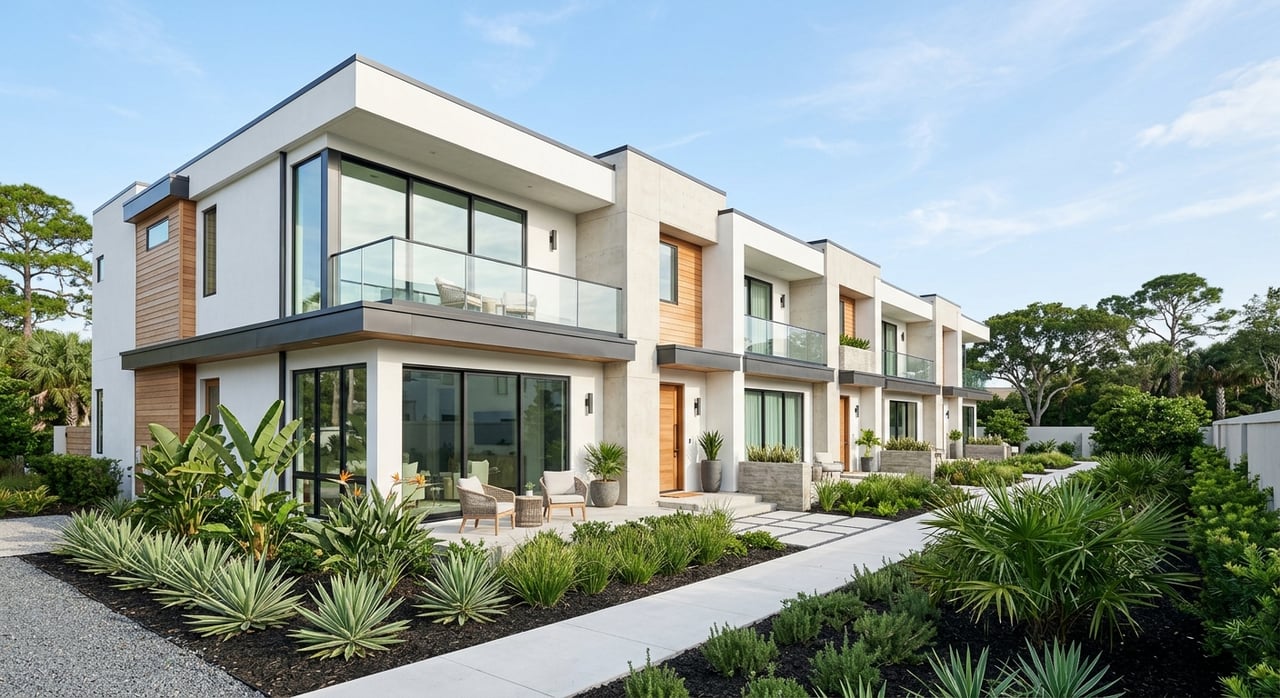
Looking for a home that lets you spend less time on upkeep and more time enjoying Palm Harbor? You are not alone. Many buyers are drawn to townhomes and villas because they want ownership without the full workload of a large yard or extensive exterior maintenance. The good news is that Palm Harbor offers several options that can fit that goal, but the details matter more than the label. Let’s dive in.
Why Palm Harbor Works for Low-Maintenance Living
Palm Harbor has the kind of housing profile that naturally supports low-maintenance ownership. Census Bureau data shows 61,366 residents, a 77.9% owner-occupied housing rate, and 28.6% of residents age 65 or older. That points to an established community where many buyers may value convenience, simplified upkeep, and a more lock-and-leave lifestyle.
The area also offers strong access to outdoor recreation without requiring you to maintain a large private lot. John Chesnut Sr. Park includes 255 acres on Lake Tarpon with multiple trails. Wall Springs Park connects to the Pinellas Trail, and Honeymoon Island State Park offers more than four miles of beach and a three-mile trail.
For many buyers, that combination is the appeal. You can enjoy nature, trails, and waterfront access while shifting some exterior responsibilities to an association.
Townhomes and Villas Are Not the Same Thing
One of the biggest mistakes buyers make is assuming that a property called a townhome or villa comes with a standard maintenance setup. In Florida, the legal structure matters more than the marketing language. A community may be governed as a homeowners’ association under Chapter 720 or as a condominium under Chapter 718, and those documents control who maintains what.
That means you cannot rely on the sign at the entrance alone. The recorded declaration, bylaws, rules, and related documents define maintenance duties, property use restrictions, and buyer disclosures.
In Palm Harbor, you can see this variety in real communities. Harbor Ridge describes itself as an 84-home townhome community with two- and three-bedroom homes. Other communities such as Wedgewood, Glenbrook, and Village of Woodland Hills highlight amenity-focused living with features like pools, clubhouses, hot tubs, tennis, and shared green spaces.
What “Low-Maintenance” Usually Means
Low-maintenance living often means fewer exterior chores, but it does not mean zero responsibility. In many condo communities, the association is responsible for common elements unless the declaration shifts a limited common element duty to the owner. Florida condo law also gives associations broad rights to access units when repairs or replacements are needed.
In HOA-governed communities, maintenance responsibilities can look different. The association records must include important items such as the declaration, bylaws, rules, insurance policies, contracts, budgets, and plans and warranties tied to association-maintained improvements. Those records generally must be made available within 10 business days after a proper written request.
This is why two homes with a similar look can come with very different ownership obligations. One may include roof and landscaping in the monthly fee, while the other may leave more of that work with you.
What Palm Harbor Communities May Offer
One major reason buyers choose this style of home is the tradeoff between private maintenance and shared amenities. In some Palm Harbor communities, that may be as simple as a pool and clubhouse. In others, the amenity package is much broader.
Highland Lakes is a good example of how far that can go. Public community materials highlight a 27-hole executive golf course, an Olympic-size heated pool and spa, a lodge on Lake Tarpon, pontoon boats, tennis, pickleball, bocce, shuffleboard, and an active social calendar.
That does not mean every buyer needs a large amenity package. It does mean you should compare the monthly fee with how you actually plan to live. If you will regularly use the pool, trails, club facilities, or golf features, the value equation may feel very different than it does on paper.
The Real Tradeoff: Convenience vs Fees
Low-maintenance ownership can save time, but it can also come with regular and unexpected costs. Florida law makes clear that associations may collect regular assessments and special assessments, and unpaid assessments can become liens. Condo owners are also responsible for assessments that come due while they own the unit.
That makes the decision more practical than emotional. You are weighing reduced maintenance and shared amenities against monthly fees, possible fee increases, and the chance of future special assessments.
For some buyers, that tradeoff is well worth it. For others, especially buyers who want more control over exterior decisions or lower recurring fees, it may not be the right fit.
What to Review Before You Buy
Before you buy a townhome or villa in Palm Harbor, focus on the documents and the maintenance matrix. This is where you learn what the association handles, what you handle, and how the community operates.
For HOA-governed communities, Florida requires a disclosure summary before a buyer signs the contract. That summary explains that you will be a member of the association, that restrictive covenants apply, that regular and special assessments may be owed, and that unpaid assessments can lead to a lien. If the disclosure is not delivered, the buyer has a statutory cancellation right.
For condo purchases, the disclosure package is broader. Buyers should expect to review the declaration, articles, bylaws, rules, management and maintenance contracts, operating budget, floor plans, plot plans, covenants and restrictions, and where applicable, the milestone inspection summary, most recent structural integrity reserve study, and turnover inspection report.
Your Palm Harbor Due Diligence Checklist
As you compare townhomes and villas, keep your questions simple and specific:
- Who maintains the roof, exterior walls, landscaping, irrigation, windows, doors, and hurricane protection?
- What is included in the monthly fee, and what costs are separate?
- Are there special assessments, reserve shortfalls, or recent reserve votes?
- Are there restrictions on pets, rentals, vehicles, guest stays, or seasonal occupancy?
- Does the community require architectural approval for exterior changes or hurricane-protection upgrades?
These answers can shape your day-to-day experience just as much as the floor plan. A beautiful home can still be the wrong fit if the rules, fees, or maintenance split do not match your lifestyle.
Why the Maintenance Matrix Matters Most
If you remember one thing, make it this: the word villa or townhome does not tell you enough. What matters is the legal form of ownership and the recorded documents behind it.
For example, one villa-style property may operate as a condo where the association handles much of the exterior. Another may be a fee-simple property in an HOA where your maintenance responsibilities are more hands-on. The only way to know is to review the governing documents carefully.
This is especially important when you are thinking about roofs, windows, doors, lanais, patios, or hurricane protection. These items can affect both your ongoing costs and your ability to make changes later.
Finding the Right Fit in Palm Harbor
Palm Harbor can be a strong match if you want a more streamlined ownership experience in a well-established Pinellas County location. The area’s parks, trails, beach access, and amenity-rich communities make it possible to enjoy an active lifestyle without taking on a large amount of property upkeep.
The best choice usually comes down to how you live. If you value convenience, shared amenities, and less exterior work, a townhome or villa may check the right boxes. If you prefer more autonomy and fewer community rules, you may want to look more closely at other property types.
A careful, document-first review can help you buy with confidence. If you are exploring low-maintenance living in Palm Harbor and want a clear, process-driven approach, Maria Azuaje can help you compare communities and find the right fit for your lifestyle.
FAQs
What makes Palm Harbor appealing for low-maintenance living?
- Palm Harbor offers an established owner-occupied housing base, strong access to parks and trails, and communities where shared amenities can reduce the need for a large private lot.
What is the difference between a Palm Harbor townhome and villa?
- In Palm Harbor, the label alone does not determine maintenance duties. The key difference comes from whether the property is governed as an HOA or a condominium and what the recorded documents say.
What should you review before buying a villa or townhome in Palm Harbor?
- You should review the declaration, bylaws, rules, budget, disclosure materials, maintenance responsibilities, reserve information, and any restrictions on use, exterior changes, or occupancy.
Do Palm Harbor low-maintenance communities still have financial risks?
- Yes. Monthly assessments, special assessments, reserve shortfalls, and liens for unpaid assessments are all possible, so it is important to understand the community’s financial structure before you buy.
Are amenities included in every Palm Harbor townhome or villa community?
- No. Some communities offer only basic amenities like a pool or clubhouse, while others may include broader recreational features, so you should compare the fee structure with the amenities you expect to use.